Google OAuth Error Message: Permission denied to generate login hint for target domain.
Root Cause: development server, was using http://127.0.0.1:8080, even if I added it to cloud config, does not work. But once I change to http://localhost:8080, it starts to work.
Monday, July 18, 2016


Tuesday, June 21, 2016
Summer Fun with Google BigQuery
Nothing beats a game that can keep the whole family entertained for a few hours, while teaching kids some programming sense.
Just two weeks into summer, I already ran out of ideas to keep kids entertained.
Today, Google BigQuery come to the rescue. To be more precise, the USA Name Data provided hours of entertainment.
After showing my kids a few very simple queries of the USA Name Data, we started to play "Family Feud" game:
Then we played another game with the dataset with these rules
Here is a sample query
Now, after we are done with the game, the following two queries will show us the top answers.
 While the kids are still keen on it, some follow up questions will keep their brains from getting rusty:
Just two weeks into summer, I already ran out of ideas to keep kids entertained.
Today, Google BigQuery come to the rescue. To be more precise, the USA Name Data provided hours of entertainment.
"This public dataset was created by the Social Security Administration and contains all names from Social Security card applications for births that occurred in the United States after 1879."
After showing my kids a few very simple queries of the USA Name Data, we started to play "Family Feud" game:
Most Popular Names
- Everyone write down 5 names in secret
- After we are done, each need to write their own query and run it in BQ to find out total count of these five names in all years
- Whoever gets the most counts wins
- Cannot reuse names in the following rounds
Then we played another game with the dataset with these rules
Least Popular Names
- Write down 5 names in secret
- The names must draw at least one count
- Whoever gets the least counts wins
Here is a sample query
SELECT SUM(number), name
FROM [bigquery-public-data:usa_names.usa_1910_2013]
WHERE name in ('John', 'Jason', 'Mary', 'David', 'William')
GROUP BY name
Now, after we are done with the game, the following two queries will show us the top answers.
Least Popular Names
SELECT SUM(number), name
FROM [bigquery-public-data:usa_names.usa_1910_2013]
GROUP BY name
ORDER BY 1
Most Popular Names
SELECT SUM(number), name
FROM [bigquery-public-data:usa_names.usa_1910_2013]
GROUP BY name
ORDER BY 1 DESC
Some Follow Up Questions

- How many kids were born in the same year, and with the same name as yours?
- Which year has the most kids with the same name as yours?
- Are there any kids with your name in the opposite gender?
- Which years are "baby boom" years? (Hint: save to Google Sheet, and plot year vs. count(number))
- Which years have the most "Jacqueline"s and why? (Hint: opportunity for some history lessons about first ladies)
- Most gender neutral names (Hint: refer to this page)
Tuesday, May 17, 2016
Angular 2: Building a Google Map Component
Live Demo
Github Repo
In order to force myself dig deeper into Angular 2, I tried to build a component wrapper for Google Map JavaScript API. The end results is a demo component here: google_map.component.ts.
First, make sure Google Maps library is loaded from here:
On the CSS side, it is very important to set height of Google Map component. If not done, it is automatically collapsed to nothing, and you won't see a map.

Github Repo
In order to force myself dig deeper into Angular 2, I tried to build a component wrapper for Google Map JavaScript API. The end results is a demo component here: google_map.component.ts.
Sample Client Code
A sample client code using the component looks like this:Features
The features including:- Drawing through Angular binding
- Map events published as Angular events
Tips
Here are some code snippets the highlights some of the lessons I have learned.First, make sure Google Maps library is loaded from here:
https://maps.googleapis.com/maps/api/js?key={YOUR_API_KEY}&libraries=visualization,place&callback=initMap
Add this line in typings.ts, so that we can have type definitions for Google Maps JavaScript API
"googlemaps": "github:DefinitelyTyped/DefinitelyTyped/googlemaps/google.maps.d.ts"Event handlers turns out to be tricky. My naive first implementation was something like this
this.map.addListener('click', function(e: google.maps.MouseEvent) {
  this.mapClick.emit(e.latLng));
);
Turns out there are two big problems in this implementation:thisinside the event handler does not have membermapClick. Because it is no longer the component class- Once scope of
thisis fixed, I found data changes in the event handler does not trigger Angular change detection
On the CSS side, it is very important to set height of Google Map component. If not done, it is automatically collapsed to nothing, and you won't see a map.
Demo
Finally, a functional demo is here: google_map.html. Below is screenshot of the demo in action:
Monday, May 02, 2016
Angular 2: Injecting Parent and Child Component
Live Demo
Github Repo
To inject children component into a parent component, use
To inject a parent into child component, you simply need to inject parent in the
A small working example showing both child and parent component injection can be downloaded here: https://github.com/huguogang/ng2tsdemo/blob/master/view_child.html.
Github Repo
To inject children component into a parent component, use
ViewChildren (notice there is also ConentChildren which will inject children from content projection).
To inject a parent into child component, you simply need to inject parent in the
constructor of child component. However, there is a bit of problem due to circular reference. The parent component has to reference child component as directive. If the child also depends on parent, we will get an error like this: EXCEPTION; Cannot resolve all parameters for '[ParentComponent]'.... So, the following slightly twisted injection is needed:
contructor(@Inject(forwardRef(() => ParentComponent)) private _parent: ParentComponent)
A small working example showing both child and parent component injection can be downloaded here: https://github.com/huguogang/ng2tsdemo/blob/master/view_child.html.
Angular 2 Content, Content Projection, Transclusion
Live Demo
Github Repo
I guess under all these fancy words (especially Transclusion), there is a simple concept. And it seems to me, it is way easier to learn it by starting with looking at a working sample, make some changes and observe the changes.
I have created a bare minimum working example here: https://github.com/huguogang/ng2tsdemo/blob/master/content.html
Here are the key code fragments. Related elements are color coded.
Template for the directive:
Github Repo
I guess under all these fancy words (especially Transclusion), there is a simple concept. And it seems to me, it is way easier to learn it by starting with looking at a working sample, make some changes and observe the changes.
I have created a bare minimum working example here: https://github.com/huguogang/ng2tsdemo/blob/master/content.html
Here are the key code fragments. Related elements are color coded.
Template for the directive:
<div>
  <h1><ng-content select="my-title"></ng-content></h1>
  <div>
    <ng-content select="content"></ng-content>
  </div>
  <br/>
  <em style="font-size:smaller"><ng-content select="footer"></ng-content></em>
</div>
Markup in the client component:
<multi-slot-content>
  <my-title>Angular 2 Content Demo</my-title>
  <content>The selectors defined in MultiSlotContent directive will find
    the content element in this template, insert it into it's own template
    section.</content>
  <footer>Footer: this feature was called transclusion in Angular 1.</footer>
</multi-slot-content>
Resulting HTML Markup:
<multi-slot-content>
  <div>
    <h1><my-title>Angular 2 Content Demo</my-title></h1>
    <div>
      <content>The selectors defined in MultiSlotContent directive will find
        the content element in this template, insert it into it's own template
        section.</content>
    </div>
    <br>
    <em style="font-size:smaller"><footer>Footer: this feature was called transclusion in Angular 1.</footer></em>
  </div>
</multi-slot-content>
Notice the key is to define proper Angular 2 selectors in the directive. Then in the client component, it just need to fill the content in the right selector target. The end result is the directive's ng-content elements got replaced by the fragments from client.
Sunday, May 01, 2016
Angular 2 HTTP JSON Service
Live Demo
Github Repo
Here is a bare minimum demo of how to use Angular 2 HTTP JSON Service:https://github.com/huguogang/ng2tsdemo/blob/master/json_service.html
The demo uses observable instead of promise. A few potential catches:
Github Repo
Here is a bare minimum demo of how to use Angular 2 HTTP JSON Service:https://github.com/huguogang/ng2tsdemo/blob/master/json_service.html
The demo uses observable instead of promise. A few potential catches:
- Import Rx.js in html file:
<script src="node_modules/rxjs/bundles/Rx.js"></script>
- Import rxjs/Rx in service:
import 'rxjs/Rx'
- Register
HTTP_PROVIDERS
Angular 2 Renderer
Live Demo
Github Repo
Renderer in Angular 2 is a fascinating topic. It does not have an official documentation yet. As of this writing 5/1/2016, there is only a list of public method signatures here: https://angular.io/docs/ts/latest/api/core/Renderer-class.html.
It turns out it is very easy to get a hold of the renderer in your components. All it takes is to declare a Renderer in contructor, Angular 2 will inject it for you.
Code sample to inject renderer:
A working demo on github: https://github.com/huguogang/ng2tsdemo/blob/master/renderer.html
Github Repo
Renderer in Angular 2 is a fascinating topic. It does not have an official documentation yet. As of this writing 5/1/2016, there is only a list of public method signatures here: https://angular.io/docs/ts/latest/api/core/Renderer-class.html.
It turns out it is very easy to get a hold of the renderer in your components. All it takes is to declare a Renderer in contructor, Angular 2 will inject it for you.
Code sample to inject renderer:
constructor(private _renderer: Renderer) { }
A working demo on github: https://github.com/huguogang/ng2tsdemo/blob/master/renderer.html
Friday, April 01, 2016
Angular 2 Resources
Official web site
https://angular.ioOfficial Github Repo
https://github.com/angular/angularA few notable sub-directories:
- Source Code: https://github.com/angular/angular/tree/master/modules/angular2/src
- Release Progress: https://github.com/angular/angular/milestones
Angular CLI
https://github.com/angular/angular-cliCommand line interface. It helps to build skeleton code for a new project that follows best practice. Not officially released yet. But very helpful. It generates project with proper folder structure, unit testing and end2end tests are also included.
npm packages
- angular2: https://www.npmjs.com/package/angular2
angular-cli: https://www.npmjs.com/package/angular-cli
Blog about Angular 2 (and other Software topics) by Victor Savkin
http://victorsavkin.comThere are not many tutorials here, but those few entries will give us a deep dive into Angular 2 design philosophy.
egghead.io
https://egghead.io/technologies/angular2A series of short video tutorials about angular 2.
Stackoverflow tagged Angular 2
http://stackoverflow.com/questions/tagged/angular2Friday, July 31, 2015
ExtJS 6.0.0 GPL is out
Go here: https://www.sencha.com/legal/gpl/, select "Sencha Ext JS" and give your email address.
This version has quite a few feature and performance improvements. https://docs.sencha.com/extjs/6.0/whats_new/6.0.0/whats_new.html
This version has quite a few feature and performance improvements. https://docs.sencha.com/extjs/6.0/whats_new/6.0.0/whats_new.html
Monday, July 06, 2015
JPA Join Fetch
A couple of key points to have a successful join fetch in JPA (backed by Hibernate):
- Why do we want join fetch? JPA default fetch strategy is "Lazy", which has better performance under most circumstances. But, sometimes we do want to retrieve all children (and sometimes children's children). In that case, join fetch allows us to get everything in one Database round-trip instead of N (or N*N round-tips). This change can easily speed up those queries for 100 times (in my case it went from 20 seconds to 0.2 seconds).
- Make sure in your Entity classes, the child collections are "Set
" not "List ". If you get the error message: "Hibernate cannot simultaneously fetch multiple bags". This is the root cause. - How to join multiple levels:
        root
          .fetch([childAttributeName], JoinType.LEFT)
          .fetch([grandChildAttributeName], JoinType.LEFT);
- Fetch join will return multiple duplicated rows for the parent entity. This is usually undesirable, wrap the return set in a LinkedHashSet will get the unique parent entities in the original select order. (See this Stack Overflow post)
Monday, March 16, 2015
Troubleshoot Networking Problems in Google Chrome Browser
* Developer Tools > Network

* chrome://net-internals/
Screenshot for the socket view: chrome://net-internals/#sockets
 * wireshark (hopefully, do not need to go that far)
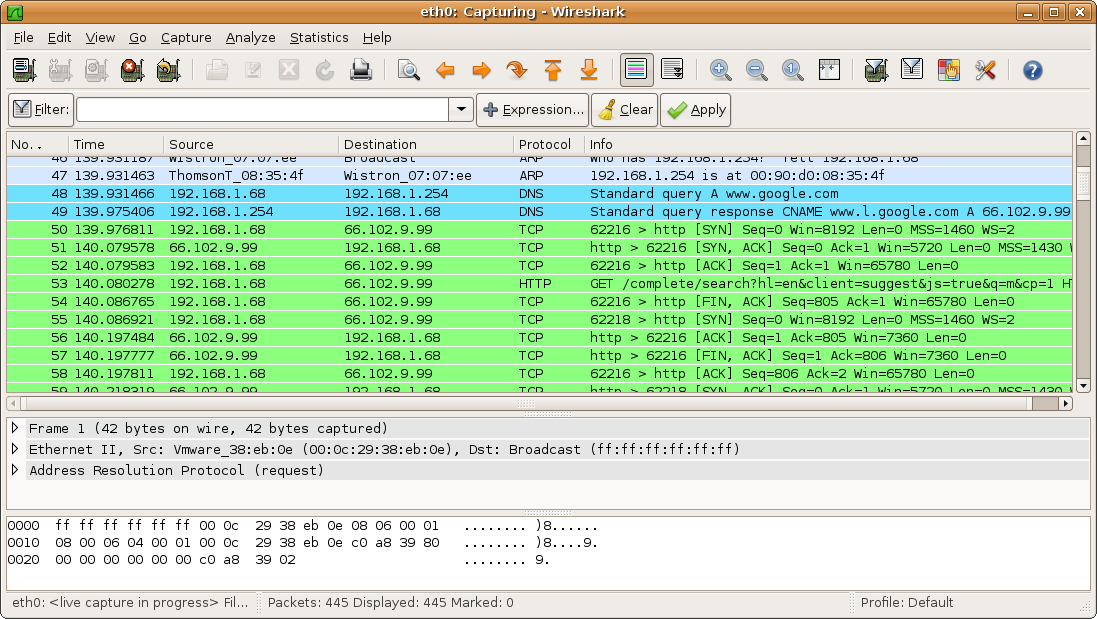
* chrome://net-internals/
Screenshot for the socket view: chrome://net-internals/#sockets
Wednesday, February 25, 2015
Coldfusion 10 Solr Indexing Zip File that Contains PDF files
Seems like I should be surprised, if I don't find some surprises in Coldfusion every week. :) Here is another one that took me a few hours to find a solution. And hopefully will save a few hours for someone else.
Environment
Coldfusion 10 Update 15
Windows Server 2012
Symptom
When indexing a bunch of files, Coldfusion stopped indexing without any exception or getting into any error state. It just stopped in the middle of indexing. If I was not looking at it closely, I would not have noticed that it has failed.
Again, Coldfusion stopped the execution without throwing a fuss is a big surprise for me. If I run it in Brower, there is no usual 500 server error. Everything is just hunky-dory as far as Coldfusion is concerned!?
Cause
After some digging, I found out the following
So, obviously, our Coldfusion distribution is missing some libraries.
Solution
Short answer: find jar file for PDFBox, throw them under Coldfusion lib folder and restart Coldfusion. And I got the jar file from here: pdfbox-0.8.0-incubating.jar
Long Answer: However, as with all Open Source projects, there is not much consideration of backward compatibility or official supported bundled distribution. I tried to download latest version of PDFBox, and it just does not work. So, I will need to find the original bundled version, and here is the journey (without detours I took :( ) to the right jar file
Another Challenge (unsolved)
There is still some unsolved challenge for Solr. For example, Verity can index our PDF files correctly, but Solr's PDF reader seem to be sub-par. It only got some fragmented text from our PDF file, and it's missing a lot of keywords in our PDF files.
Environment
Coldfusion 10 Update 15
Windows Server 2012
Symptom
When indexing a bunch of files, Coldfusion stopped indexing without any exception or getting into any error state. It just stopped in the middle of indexing. If I was not looking at it closely, I would not have noticed that it has failed.
Again, Coldfusion stopped the execution without throwing a fuss is a big surprise for me. If I run it in Brower, there is no usual 500 server error. Everything is just hunky-dory as far as Coldfusion is concerned!?
Cause
After some digging, I found out the following
- It stopped on a zip file
- The zip file has some PDF files in it
- Coldfusion-error.log has the following message
Feb 25, 2015 8:30:28 AM org.apache.catalina.core.StandardWrapperValve invoke
SEVERE: Servlet.service() for servlet [CfmServlet] in context with path [/] threw exception [ROOT CAUSE:
java.lang.NoClassDefFoundError: org/apache/pdfbox/pdmodel/PDDocument
 at org.apache.tika.parser.pdf.PDFParser.parse(PDFParser.java:53)
 at org.apache.tika.parser.CompositeParser.parse(CompositeParser.java:120)
 at org.apache.tika.parser.AutoDetectParser.parse(AutoDetectParser.java:101)
 at org.apache.tika.parser.DelegatingParser.parse(DelegatingParser.java:52)
 at org.apache.tika.parser.pkg.PackageParser.parseArchive(PackageParser.java:78)
 at org.apache.tika.parser.pkg.ZipParser.parse(ZipParser.java:49)
 at org.apache.tika.parser.CompositeParser.parse(CompositeParser.java:120)
 at org.apache.tika.parser.AutoDetectParser.parse(AutoDetectParser.java:101)
 at coldfusion.tagext.search.SolrUtils.getMetadata(SolrUtils.java:599)
 at coldfusion.tagext.search.SolrUtils.getSolrDocument(SolrUtils.java:753)
 at coldfusion.tagext.search.SolrUtils.addDocument(SolrUtils.java:1339)
 at coldfusion.tagext.search.IndexTag.doUpdate(IndexTag.java:651)
 at coldfusion.tagext.search.IndexTag.doStartTag(IndexTag.java:340)
So, obviously, our Coldfusion distribution is missing some libraries.
Solution
Short answer: find jar file for PDFBox, throw them under Coldfusion lib folder and restart Coldfusion. And I got the jar file from here: pdfbox-0.8.0-incubating.jar
Long Answer: However, as with all Open Source projects, there is not much consideration of backward compatibility or official supported bundled distribution. I tried to download latest version of PDFBox, and it just does not work. So, I will need to find the original bundled version, and here is the journey (without detours I took :( ) to the right jar file
- Search CF10 folder for tika jar file, found tika-parsers-0.6.jar
- Google Tika source, found it SVN root
- Find maven POM file under 0.6 tag: http://svn.apache.org/repos/asf/tika/tags/0.6/tika-parsers/pom.xml
- Located reference of PDFBox
<dependency>
  <groupId>org.apache.pdfbox</groupId>
  <artifactId>pdfbox</artifactId>
  <version>0.8.0-incubating</version>
</dependency>
- Google "pdfbox 0.8.0 incubating"
- voila
Another Challenge (unsolved)
There is still some unsolved challenge for Solr. For example, Verity can index our PDF files correctly, but Solr's PDF reader seem to be sub-par. It only got some fragmented text from our PDF file, and it's missing a lot of keywords in our PDF files.
Monday, February 23, 2015
CFScript bug?
An extra semicolon at the end of "if" block is causing a lot of head scratching for me recently. Please see the code snippet below.
Expected output should be:
However, below is the actual output:
Now, please notice this extra ";" at the end of line 6. If I remove it, everything will just work as expected.
 |
| Figure 1. Expected Output |
 |
| Figure 2. Actual Output |
<cfscript>
    private struct function test() {
        if(1 == 1) {
            if(1 == 0) {
                writeOutput("1==0");
            }; //<- look at here
            writeOutput("true");
            return {data = 1};
        }
        writeOutput("false");
        return {data = 2};
    }
    writeDump(test());
</cfscript>
Due to the lack of specifications for CFScript language, I cannot tell if this grammar is even allowed. But I can tell you this: the journey of discovering and finding the root cause of this problem is not fun at all!Symptom
CFScript fall through the "if-else" statement, and did not return to caller from the expected branch.Cause
An extra semicolon at the end of a block is the root cause.Friday, December 19, 2014
Node.JS Error "Cannot find module '...'"
Setting up NodeJS is generally a smooth process. There is one thing need to be taken care of manually: set up environment variable NODE_PATH. This variable must point to the npm global installation location, otherwise you NodeJS application may have problem starting with error message like this:
Error: Cannot find module 'XXX'
In Windows, the easiest way is to go Computer > Properties > Advanced System Settings > Environment Variables > User Variables > New

After the configuration, need to exit the current command line and start a new one in order to see the environment variable in effect.
Wednesday, November 19, 2014
IIS Error: Cannot write configuration file
Symptom
When trying to change IIS configuration, got this error message:
Filename:
\\?\C:\Windows\System32\inetsrv\config\applicationHost.config
Error: Cannot write configuration file
 |
| Error Message |
Diagnosis
Turns out root cause of the problem is a full C: drive.
 |
| Windows Explorer |
Solution
Luckily, this is a virtual machine with some spare disk capacity. So it's just a matter of allocating more resource, then extend C: drive.
Wednesday, November 05, 2014
Flex TextArea problem in DataGrid
Problem
Flex 4 TextArea does not take multi-line entry when used as editor in DataGrid.Solution
Add editorUsesEnterKey="true" attribute to the column with TextArea editor.P.S.
The solution is straightforward. But the route to finding this solution kind of proves open source or at least show your customer the source code is very important.I first suspect the enter key is intercepted by DataGrid, but it appears that keydown event is intercepted by DataGrid before the TextArea. Some Googling with various keyword combination did not turn up anything interesting.
Not sure where to start, I added a itemEditEnd event handler to the DataGrid, and set a breakpoint there. After walking through the stack, I saw the following code segment, and thus the solution above pops out. Now I can simply go to documentation of editorUsedEnterKey and make sure this is what I want.
(Code of interest from DataGrid.as)
/**
* @private
*/
private function editorKeyDownHandler(event:KeyboardEvent):void
{
// ESC just kills the editor, no new data
if (event.keyCode == Keyboard.ESCAPE)
{
endEdit(DataGridEventReason.CANCELLED);
}
else if (event.ctrlKey && event.charCode == 46)
{ // Check for Ctrl-.
endEdit(DataGridEventReason.CANCELLED);
}
else if (event.charCode == Keyboard.ENTER && event.keyCode != 229)
{
// multiline editors can take the enter key.
if (!_editedItemPosition)
return;
if (columns[_editedItemPosition.columnIndex].editorUsesEnterKey)
return;
// Enter edits the item, moves down a row
// The 229 keyCode is for IME compatability. When entering an IME expression,
// the enter key is down, but the keyCode is 229 instead of the enter key code.
// Thanks to Yukari for this little trick...
if (endEdit(DataGridEventReason.NEW_ROW) && !dontEdit)
{
findNextEnterItemRenderer(event);
if (focusManager)
focusManager.defaultButtonEnabled = false;
}
}
}
Thursday, August 21, 2014
Ubuntu LTS 12 on VMWare Player Showing Multiple Columns of Identical Screens
Symptoms
After updating to Kernel 3.2.0.67 and reboot, my screen is showing three columns of duplicated desktop.
Environment:
- VMWare Player 6.0.3
- Ubuntu: 12.04 LTS, Kernel 3.2.0.67 (post upgrade version, I'm not sure what was the version before my upgrade)
- The VM image was created way back in a very old VMWare Player, started from Ubuntu 10. It has been kept up-to-date by applying Ubuntu patches and eventually to 12.04 LTS. Turn out this probably was the root cause of all the troubles
Solution
After some Google search and reading up on posts, I was eventually lead to the following thread:
Guest display split into identical panesFlip to page 2, on post 17 from thellstrom, there is the solution that worked for me. I used solution 1b mentioned in the post, and after reboot, everything is back to normal.
Cause
So, based on the article, root cause of the problem is due to VM created on old version of player with virtualHW version 7. I updated the config file from version 7 to 9, and everything appears to be working now.
Thursday, August 14, 2014


SQL Injection Attack - Law Enforcement be Aware
Must see, "High Tech" attack of law enforcement IT network. It may crash license plate readers, red light cameras, ...
No seriously, it might work.
Source: http://coolshell.cn/
No seriously, it might work.
 |
| SQL Injection Attack |
Source: http://coolshell.cn/
Wednesday, August 13, 2014
Lua in Visual Studio 2013
Build Lua for Windows using Visual Studio 2013 is a very straightforward task.
Project to build lua.exe:
- Create Project > Visual C++ > Empty Project
- Add Existing Item ...
- Select all files under src except luac.c
- Project Property > All Configurations > Configuration Properties > C/C++ > Preprocessor > Preprocess Definitions, add: _CRT_SECURE_NO_WARNINGS

That is it.
To build luac.exe, simply repeat above steps. When selecting files, select all files, except lua.c.
Subscribe to:
Posts (Atom)